



Services

Specialized IT services that extend your team’s expertise.

Protection Services

Resilience by design, not by accident.

Infrastructure

Resilience by design, not by accident.

Crisis & Recovery

From chaos to control, fast.

Professional

Strategy that holds under pressure.

Solutions

Cybersecurity, recovery, and continuity working as one.

Cybersecurity Core

Essential protection. No unnecessary complexity.

Resilience Pro

Proactive defense beyond the basics.

Enterprise Protection

Built-in security from the ground up.

Executive Continuity

Board-level confidence. Always-on operations.

Partner with Us

Expand capabilities without expanding overhead.

About Ozone

Reduce downtime. Protect revenue. Stay operational.

Resources

Insights, guides, and tools to help you and your business

Latest

Latest

August 31, 2026

Planning Is Your Best Defense: A Cautionary Tale on Assumed Security

December 11, 2025

Utility Global and Kyocera Join Forces to Scale H2Gen® Manufacturing Globally for Economic Industrial Decarbonization

HOUSTON, TX – December 11, 2025 – Utility Global (“Utility”), a U.S.-based global economic industrial decarbonization company, today announced a strategic partnership with Kyocera International, Inc. (“Kyocera”) to scale the manufacturing of its proprietary...

Planning Is Your Best Defense: A Cautionary Tale on Assumed Security

“We have a backup provider” is not the same as “we know our backup works.”

By: Marc Schwartz, President of Ozone IT Services

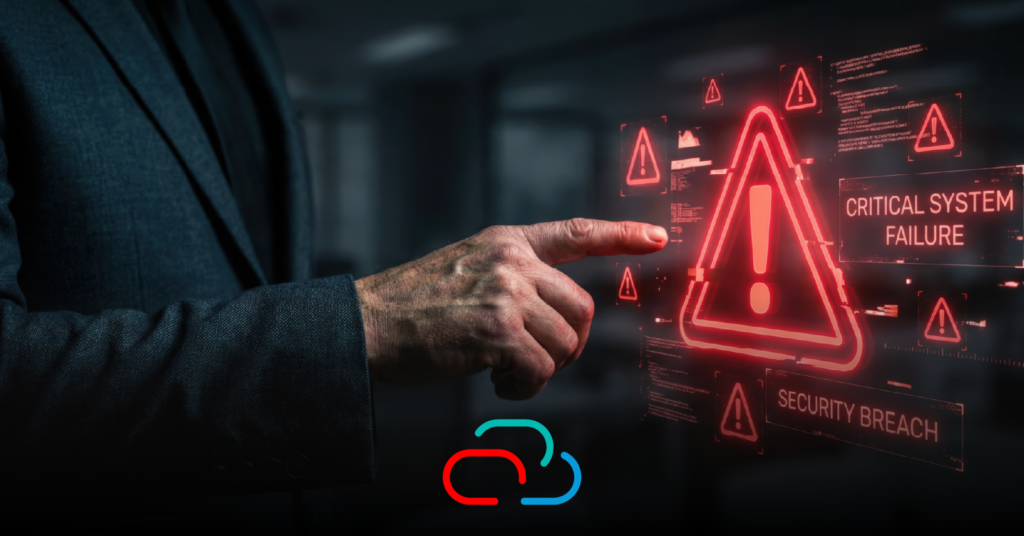
Here’s a scenario that plays out more often than most companies would like to admit: a mid-size company outsources its data backup to an IT provider. The contract is signed, the backups run on schedule, and the report shows green checkmarks month after month. Leadership stops thinking about it. It’s handled.

Then a server fails. Or ransomware hits. Or an employee accidentally deletes a folder no one realizes matters until it’s gone. The company goes to restore from backup and discovers the backup that had been running “successfully” for months was incomplete, corrupted, or simply couldn’t be restored within a timeframe that mattered. The provider had been backing up the data. No one had ever tested whether that data could actually come back.

This is the story behind more real crises than most companies realize and it’s almost never a story about bad intentions. It’s a story about assumption standing in for verification. How do we know this? Because Ozone has been called to the rescue more than once. Keep reading to see what every company needs to avoid an IT emergency.

Where the Assumption Usually Breaks Down

“Our provider handles backups” isn’t the same as “have we tested recovery?” Backup and recovery are two different disciplines. A backup job completing successfully tells you data was copied. It doesn’t tell you that data can be restored quickly, completely, and in a form your business can actually use during an active crisis, which is the only moment that actually matters.

Outsourcing IT isn't the same as outsourcing accountability.

When a company hands backup and security responsibility to an outside provider, it’s easy to treat that relationship as “solved” rather than as an ongoing partnership that requires oversight, reporting, and periodic testing. The providers worth trusting build and manage that oversight and process. The ones that don’t leave companies discovering the gap at the worst possible moment.

Recovery time objectives are rarely discussed until they're missed.

Most companies never ask, in concrete terms, how long a full recovery would actually take. When a crisis hits, “we’ll restore from backup” sounds reassuring until the restore takes three days, and the business can’t function for three days.

What "Assume Nothing" Actually Looks Like

The companies that come through a crisis with minimal damage aren’t the ones who got lucky. They’re the ones who treated backup and recovery as something to be planned, tested, and verified regularly, not something to be assumed.

That means:

  • Regularly testing recovery, not just backup completion. A backup that’s never been restored is a theory, not a plan.
  • Documented, known recovery time objectives. Everyone from IT to leadership should know how long a real recovery takes before it’s needed.
  • Clear accountability with any outsourced provider. Reporting shouldn’t stop at “backup succeeded.” It should include recovery testing results, gaps identified, and how they were closed.
  • A crisis plan that assumes something will go wrong eventually (because eventually, for every company, something does) is an effective and valuable resource to every company.

Crisis and Recovery Planning are Essential in IT but Frequently not an Investment Priority

Crisis and recovery planning sits at the intersection of backup infrastructure and cybersecurity because, increasingly, the crises companies face aren’t hardware failures. They’re ransomware and targeted attacks specifically designed to compromise backups along with production systems. A backup strategy built without security in mind is a backup strategy an attacker has already accounted for.

This is where specialized expertise matters. Internal IT teams are exceptionally good at supporting the business day-to-day, but building and continuously testing a recovery strategy that holds up against modern ransomware requires a level of specialized, current expertise that’s difficult for any single in-house team to maintain alongside everything else on their plate.

How Ozone Approaches Crisis & Recovery Differently

Ozone builds backup and recovery strategy around one standard: if it hasn’t been tested, it isn’t proven. That means:

  • Backup-as-a-Service (BaaS) architecture built for real recoverability, not just scheduled copying
  • Regular recovery testing, so the first time a restore is attempted isn’t during an actual crisis
  • Documented recovery time objectives your team and leadership can actually plan around
  • Security-integrated backup strategies designed with the assumption that ransomware will specifically target backup systems

The goal isn’t to replace your internal team’s role in this process; it’s to make sure the plan they’re relying on has actually been proven to work, backed by the kind of continuous testing and specialized expertise that’s difficult to maintain internally alongside day-to-day IT demands.

Don't Wait for the Crisis to Find the Gap

The companies that inspired this cautionary tale didn’t fail because they didn’t care about backup and recovery. They failed because they assumed a system was working without ever verifying it. That’s an easy assumption to make and an expensive one to be wrong about.

Schedule a Call

Ozone IT Services partners with manufacturing and mid-size organizations across the U.S. to build the secure, well-supported IT foundation company needs while acting as an integrated extension of internal IT teams.
Share:

Related Articles

Cybersecurity Risks in 2026: A Preventable $500K Ransomware Lesson
Read More
The War in Iran Isn’t Just Overseas…It’s Already Inside Your Business Network
Read More
Harnessing Cloud-Based Flexibility
Read More

Accessibility Toolbar

Privacy Policy

1. Introduction

Welcome to Ozone IT Services (“we,” “our,” or “us”). We are committed to protecting your personal information and your right to privacy. This Privacy Policy explains how we collect, use, disclose, and safeguard your information when you visit our website https://ozoneitservices.com/ (the “Site”).

Please read this privacy policy carefully. If you do not agree with the terms of this privacy policy, please do not access the site.

2. Information We Collect

We collect information in two ways:

  1. Information you provide to us:
    • Personal information that you voluntarily provide to us when you fill out forms on our Site.
    • This may include your name, email address, and any other information you choose to provide in the form fields.
  2. Information collected automatically:
    • We use Google Site Kit, which integrates several Google services to collect and analyze data about our website visitors.
    • This may include information such as your IP address, browser type, operating system, referring URLs, device information, pages visited, and the dates/times of visits.

3. How We Use Your Information

We use the information we collect for the following purposes:

  • To respond to your inquiries or requests
  • To provide you with information or services you have requested
  • To improve our website and user experience
  • For internal record keeping and administration
  • To analyze website traffic and optimize user experience using Google Site Kit

4. Google Site Kit

We use Google Site Kit to help us understand how visitors interact with our website and to improve our services. Google Site Kit integrates several Google services, which may include:

  • Google Analytics: for website traffic analysis
  • Google Search Console: for search performance data
  • Google AdSense: for advertising performance (if applicable)
  • Google PageSpeed Insights: for website performance data

These services collect non-personally identifiable information which may include:

  • Website traffic data
  • Search query data that led to our site
  • Indexing data
  • Data about how visitors interact with our site
  • Website performance metrics

This information helps us to improve our website and its content. Google’s ability to use and share information collected by Google Site Kit is restricted by the Google Site Kit Terms of Service and the Google Privacy Policy. You can learn more about how Google uses data when you use our site by visiting https://www.google.com/policies/privacy/partners/.

5. How We Protect Your Information

We are committed to ensuring that your information is secure. We have implemented suitable physical, electronic, and managerial procedures to safeguard and secure the information we collect online to prevent unauthorized access or disclosure.

6. Third-Party Sharing

We do not sell or lease your personal information to any third parties. However, aggregated, anonymized data collected through Google Site Kit may be shared with Google as part of the service’s functionality.

7. Cookies and Tracking Technologies

We use cookies to improve your experience on our website. These cookies may collect non-personal information. You can choose to accept or decline cookies. Most web browsers automatically accept cookies, but you can usually modify your browser setting to decline cookies if you prefer.

Google Site Kit may use cookies to collect information. You can learn more about how Google uses cookies by visiting https://www.google.com/policies/privacy/partners/.

8. Your Rights

Depending on your location, you may have certain rights regarding your personal information, such as the right to access, correct, or delete your data. Please contact us if you wish to exercise these rights.

9. Changes to This Privacy Policy

We may update our Privacy Policy from time to time. We will notify you of any changes by posting the new Privacy Policy on this page.

10. Contact Us

If you have any questions about this Privacy Policy, please contact us